A passionate, positive, disruptive, transformationalist who strives to take Pakistan into the 21st century and make it a prominent player in the 4th industrial revolution.
OKM’s mission has been and is, to enlighten, guide and facilitate the youth in identifying their hidden potential and realize that in this century of Biotechnology and an era of Bio-centrality, change is the only constant. We all need to come out of our comfort zones and work for a productive, forward looking, sustainable Pakistan & play our role in the galaxy of nation states.
OKM reflects back and narrates: “Having born into an environment which exposed me to a wide variety of thoughts and philosophies, I at an early age got to meet and hear luminaries of politics, philosophy, policy, science, rights & education. One thing that I learned was that there is no replacement for observation. One can solve million issues from being observant and it tells you a million tales.
As time passed and realities of life started appearing in front of me, the other thing that became a realization was that there is no better teacher than TIME.”
From serving the corporates to serving the public, OKM’s journey till now has been about revolutionizing and bringing harmony in lives, systems, policies and relations, either between humans, organizations or nation states.
Experiences from work life and a lifelong yearning to learn has made OKM a change agent while creating an eco-system for profits, planet and the people.
OKM strongly believes:
“Until and unless we start imbibing new technologies & innovations, keeping a balance with Mother Nature, and investing in our own wellbeing, our lives will always be in chaos and without a definite meaning.”
OKM believes in using science for the betterment and prosperity of people and nations. OKM feels “It is in collaboration through tools like Science, Diplomacy, Public – Private Partnerships, Technology Transfer, capacity building that the post Covid-19 world can gain its momentum from and achieve sustainability.”
Being committed to his thinking of ‘Harnessing the Hidden Revolution’. OKM knows that such a revolution is on our door steps and is in the commercialization of research in agriculture, environment, & health or in scientific terms through use of biotechnology and various translational techniques.
In OKM’s own words:
“This! is my passion, public policy my force and the marriage between both gives birth to positive disruption, positive revolution, change and harmony.”
Sector wise Industry served to Harness the Hidden Revolution:
- Food Processing
- Agriculture
- Cement
- Textile Sector
- Education (Educational Management)
- Higher Education
- Commercial Biotechnology
- Bio-Pharma Manufacturing
- Government
- Consulting
- Teaching
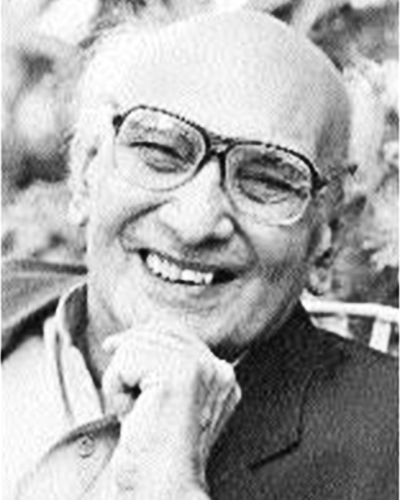
Abdullah Malik
(1920 – 2003)
OKM’s late illustrious grandfather who taught him to be “Bold & Expressive” but above all he taught him the importance and value of time.
Daduji: Abdullah Malik –
An article by OKM in Friday Times, reminiscing his grandfather
To read the article:
In a third world country and times when women seldom acquired higher education, my mother achieved a Master’s degree in Child Psychology. My father is an eminent, world renowned Biotechnologist with a PhD. We lived in Lahore in a joint family system, very common in the eastern part of the world. My grandfather was a national award winning journalist & activist who rose to be an international literary figure of his time.
My grandfather was a leftist, an author of many national award winning books. During the martial law under General Zia in Pakistan, he actively shed light upon injustices and constructively criticized policies. He made subtle changes for the betterment of his country using his pen. My father attained a PhD from the United Kingdom. He was impressed by what the west had to offer, in terms of technology. He was determined to initiate the advancements in his home country.
I am very lucky and feel contented that grand scheme of nature exposed me to patriotic scientists and journalists that were not corrupted by aims of minting money, nor did they thought about acquiring foreign currency accounts and a secure land in a distant country. I was seasoned in an environment where the devotion to one’s profession as a means for development of the country was taken quite seriously.
In late 80’s we moved to a lesser developed city, Faisalabad because of my father’s work. Few years later my father founded the National Institute of Biotechnology and Genetic Engineering (NIBGE) at Faisalabad. We lived in a residential colony, where other scientists also resided. The colony was amidst fields of various insect resistant crops and modified cotton plants.
Even before shifting to Faisalabad, me & my mother used to come to this city during my summer vacations to spend time with my father. He would take me and my younger sister to his laboratory. I used to watch with fascination, he worked with microbes and agar plates. I was intrigued by the strands of DNA, floating about as white fibers in a small tube, possessing the secrets of life itself. During the summer vacation of 1989 my father went on a short sabbatical to UCLA at the UCLA Department of Molecular, Cell and Developmental Biology as a collaborator of Prof. Dr. Ann Hirsch. He took me with him. It was then that I, a student of 7th grade was exposed to teams like genetic engineering, Nitrogen fixation and DNA extraction.
Biology charmed me and it was my first ever practical exposure to biology when I went to my dad’s lab and helped him in DNA extraction. My father allowed me to place the plants out of liquid nitrogen into the crushing bowl. This familiarity with the lab’s pungent smell of HCL as well as ethanol gave me the impetus to explore more. Sometimes during my vacations, at my fathers institute at the labs of the Agri-Biotechnology department a small boy who sometimes got lucky and helped the working scientists in preparing a solution that they called the Luria Broth Solution or LB solution.
After a stay of nearly ten years in Faisalabad, we moved to Islamabad due to my father’s appointment as Chairman of Pakistan Agriculture Research Council-PARC. I pursued a management career, it gave me an opportunity to expand my interests and widen my horizon but during that time also I kept in touch with biotechnology. It was here that my interest in the commercial aspects of Biotechnology as well as the policies/regulations surrounding it and my partiality for Agriculture Biotechnology, Food Security & Public Policy consolidated. However, I went on to work for various corporate sectors ranging from Cotton Ginning to food Production and during those ten years I kept myself barest with R&D Regulatory as well as policy developments in the commercial Biotech sector in Pakistan and abroad.
Being part of a fortunate minority of Pakistan I never encountered the real Pakistan but at one of my job posting where I was heading the northern region of Pakistan, my utopia transformed into disillusionment. I travelled extensively and experienced firsthand the plight of the rural Pakistan. I for the first time came across hunger, poverty, curable yet unapproachable diseases, and lack of resources, poor sanitation, unclean drinking water and corrupt systems. My perspectives broadened, discernment changed, I had my first taste of the real world rather the real third world. The urge to make a contribution of some sort was stronger than ever before.
In 2009 I left my cozy job as the Vice-President of a large conglomerate of South Asia and Co-founded a small startup Biotechnology Company, Invitro Biotech. It was a Contract Research Organization-CRO as well as a contract manufacturing organization-CMO. Alongside, provided accessibility, quality, affordable medical diagnostics (DNA Sequencing/RT-PCR, etc.) for disease like Tuberculosis-TB, Hepatitis and other critical diseases. As a CRO & CMO we had been actively working on doing clinical trials for life saving drugs for US-FDA and collaborating with different universities in doing research on development of rapid diagnostic kits for GMO detection in the agriculture sector. We also entered into Technology Transfer agreements with R&D institutes and universities to commercialize their research in the field of Agriculture as well as Health Biotechnology. It was not until I jumped into these technology transfer projects with different R&D institutions/universities in Pakistan and several training visits facilitated by the US-State department as well as USDA in the US that I made an important decision of my life. What I experienced in Pakistan and what I learned from my exposure in the US compelled me to rethink my views about the solutions to the problems of my country. Realizing that ‘In a world where our population will be about 9 billion by 2030, food security and the need to develop sustainable agriculture will become dominant issues causing an unprecedented demand for food and increased pressure on land’. So, I as a Pakistani living in a food scarce agrarian country realize it most and want to contribute in making my country and the world food secure.
Keeping this realization in mind I started searching for a way to give relief to the farmer creating instant contribution to food security as well as livelihood of the farmer, who is the initial critical element in this process. In late 2012 I stumbled on such opportunities and seizing the moment I on behalf of my company signed two Technology Transfer MOU (subsequently an agreement in 2013), first with the University of Veterinary and Animal Sciences-UVAS Pakistan to establish Pakistan’s first state of the art WHO certified foot and mouth disease – FMD vaccine facility based upon UVAS R&D resulting in quality vaccines with locally raised strains. The other one with the National Institute of Biotechnology & Genetic Engendering-NIBGE, Pakistan for the technology transfer and establishment of a Nitrogen based Bio-Fertilizer which they developed and could be very much beneficial to farmers as it reduced the farmers overall sowing cost substantially. As my company was a small venture after lot of search identified a Joint Venture partner for these projects and in 2013 established first JV Company by the name of Ittehad Life Sciences-ILS. I represented InVitro Vogue as its co-founder & Director and also became the CEO of ILS. The aim of this venture was to strengthen Food Security of the region particularly, Pakistan.
It has been fortunate that the Government of Pakistan, government of the largest providence of Pakistan PUNJAB, international organizations like the USAID, FAO & USDA have all been very helpful and worked with the venture through facilitating us in preparing our Business Plans, Detailed Technical designing as well as advising us on different food policy and regulatory issues as the government subsidizes FMD Vaccine for animals substantially for the small holding farmers i.e. 10 cents for one dozen of FMD vaccine when at present they have to give anything between 50 cents to $1 per dz.. Same is the case with our Nitrogen based Bio-Fertilizer. Both these ventures that I am part of; are Technology Transfer businesses.
During this journey I was happy at my efforts but not satisfies. My area of impact was good but being from the private sector, I was not part of the change mechanism. True! I had gotten lot of exposure vis-à-vis the working of the government as well as the policy issues we face when we think of focusing on ‘FOOD SECURITY especially reducing HUNGER and combating Climate Change’. Hunger and Climate Change have already landed on us and countries like Pakistan are less than prepared as the realization in the policy makers and the public servants is not there. I have been part of several national & international bodies representing the commercial agriculture sector of Pakistan and I can say with authority that the gravity of the issue is not understood.
In 2015, I got a chance of doing a USDA fellowship in Biotech. Development, Marketing & Regulatory Affairs from the USA and as soon as I returned, I enrolled myself in an International Affairs masters, specializing in the UN-FAO’s role in implementing UN-SDG-2 i.e. Zero Hunger in Pakistan.
Subsequently I started doing an MPhil in Public Policy with my focus on Governance & Institutional Reforms, looking at Public Policy impediments in implementing reforms in the agriculture sector as I believe that no policy or initiative can work without institutions with the vision for sustained progress in Pakistan.
As I am one of very few people who have worked on Zero Hunger as a UN-SDG in Pakistan as well as its institutionalization, in Late 2017, recognizing my exposure and long standing relationship with the government/international organizations on policy issues relating to technology & food security the Government of Punjab; the largest province of Pakistan offered me to join their team of advisors as a ‘Technical Advisor’ Agriculture Delivery, which I did.
As the Technical Advisor, I observed that there is a strong disconnect between the policy makers, researchers and on the ground implementers. I co-authored the Provincial Agriculture Policy-2019.
My observation and experience compelled me to conclude that there is an absence and subtle ignorance of public policy analysis, program evaluation, cost-benefit analysis and the criteria to assessing the need for government intervention, as all of this is politically over shadowed.
For Pakistan to progress and move forward it is imperative that it develops policies that facilitates its scientific and research organizations for creating a sustainable technology transfer and best practice shearing mechanisms. I have also been consent of the fact that such policies and initiatives will be futile if Pakistan does not develop or reform its Scientific and knowledge institutions so that critical thinking, with a strong understanding of commercial viabilities of the R&D can be developed into the scholars and scientists of Pakistan and they are not only running after ‘Impact Factor ” of their research publications only.
It was this thought that led me to do an MPhil in Public Policy, specializing in Governance & Institutional Reform of Science based organizations. My research gave me the understanding of our policy challenges, the archaic institutional setup and above all the lack of synergy between the federal & provincial apparatus.
I have come to believe that Governance, Institutional Development and Partnerships/collaborations are the key to growth, if Pakistan wants to become an important player of the 21st century.
Time has taught me a lot as it is the only teacher in the world that does not spare anyone. It is time with which one matures and it is also time with which events happen that change the course of your career/life forever. My time has taught me patience and a string belief in God.
I have recently authored the National Science Diplomacy Initiative for Pakistan, governed by the Ministry of Foreign Affairs of Pakistan and now am a National Consultant Institutional Reform for the Higher Commission of Pakistan
My vision is to serve Pakistan and the world community by being a catalyst & facilitator of change, innovation and sustainability through collaboration, diplomacy and reforms.
OKM Future Plans:
OKM visualizes himself doing a PhD in Science Diplomacy and facilitate his beloved country Pakistan in creating the international industry & academia linkages that it needs for it to get onto the 4th industrial revolution train.